 Call Us:
  B3/51 Vibhuti Khand, Gomti Nagar, Lucknow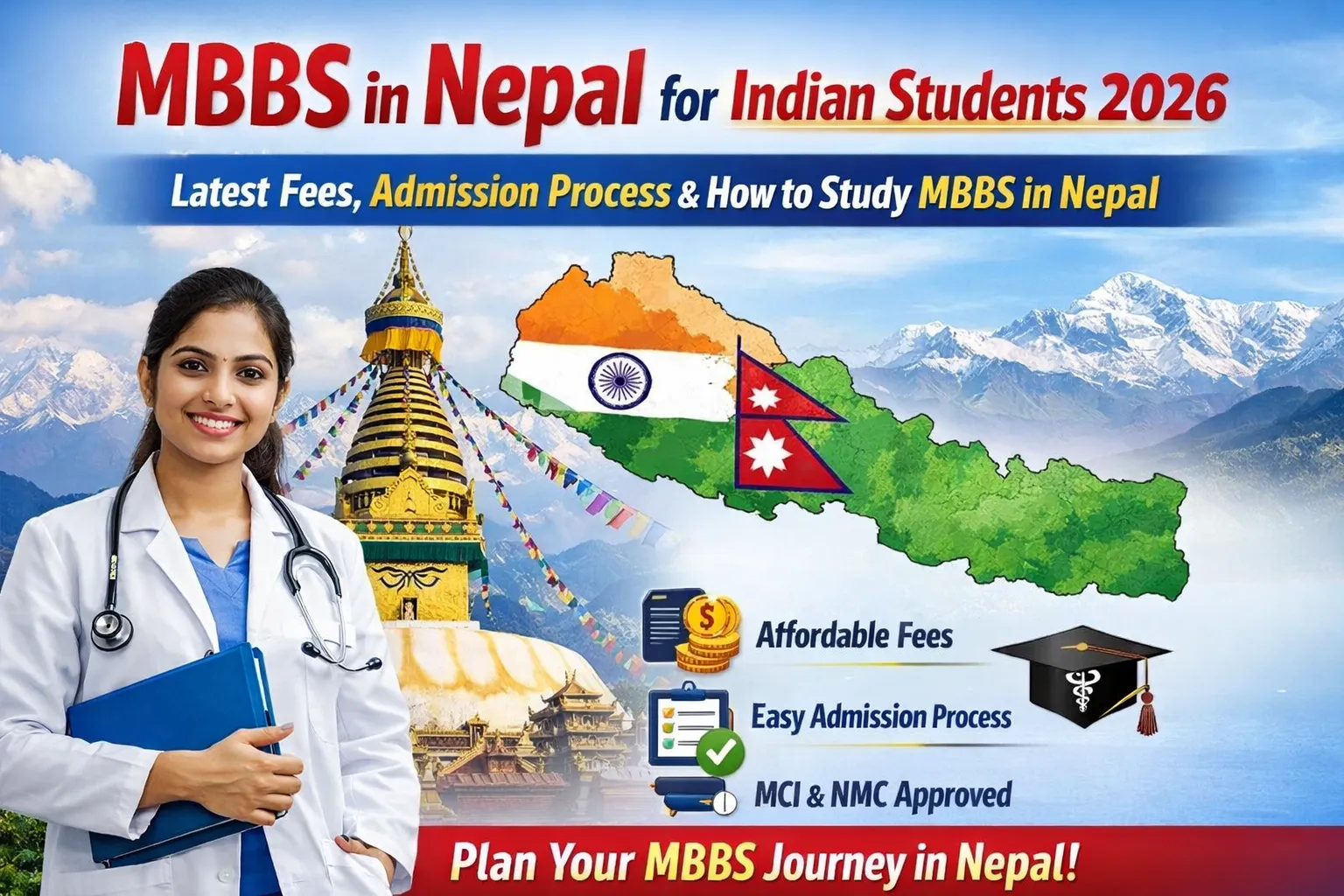
Introduction
MBBS in Nepal : In 2026, the search for aspiring Indian students who would like to become doctors has come up as a very lucrative option. However, as students face fierce competition for medical college admission in India and with a sharply rising cost structure among private colleges, Nepal is emerging as the affordable and practical choice.
Low fees are among the main MBBS benefits in Nepal for Indian student admissions, similar syllabus to India along with English-medium education and geographical proximity. Medical universities that comply with the National Medical Commission guidelines and are registered in globally accepted directories recognized by the World Health Organisation (WHO) also guarantee recognition of a medical degree from Nepal.
In this ultimate guide, you will know about new fees, admission process, eligibility and how to study MBBS in Nepal 2026.
Reasons to Study MBBS in Nepal for Indian Students
There are numerous benefits of studying MBBS in Nepal:
- Less expensive than private MBBS colleges in India
- Almost same syllabus and exam pattern as Indian medical colleges
- English-medium teaching
- Indian students don't require visa
- High-quality clinical exposure
Due to these benefits MBBS in Nepal is among the top choices for Indian students.
MBBS Fees for Indian Students in Nepal (2026)
The second reason (affordability) students prefer MBBS in Nepal.
Average Fee Structure
- Tuition Fees: ₹40 – ₹65 Lakhs
- Hostel Fees: ₹80,000 – ₹1.5 Lakhs/year
- Living Expenses: ₹10,000 – ₹20,000/month
- Total Cost: ₹45 – ₹70 Lakhs
This fee might differ depending on the university and its location. This makes Nepal a cost-effective alternative to India’s private colleges whose fees are in the range between ₹80 lakh and ₹1.5 crore.
Related : Nepal medical College MBBS [2025/26] Admission Eligibility.
Eligibility Criteria for MBBS Admission in Nepal for Indian Students
NEET Qualification
As students have to work and practice in India after graduation, qualifying NEET is compulsory as per National Medical Commission.
Academic Requirements
- 10+2 with Physics, Chemistry, Biology
- Minimum 50% marks (General category)
- 40–45% for reserved categories
Age Requirement
Minimum age: 17 by 31 December year of admission
Move in Process for MBBS in Nepal
MBBS admission process in Nepal is quite easy and straightforward.
Step-by-Step Process
Step 1 — Selection of Recognized Medical College
Choose a university that meets the approval of medical authorities in Nepal as well as the National Medical Commission.
Step 2 — Submit Application
Submit the required documents, including:
- 10th and 12th mark sheets
- NEET scorecard
- Passport or ID proof
- Passport-size photographs
Step 3 — Admission Confirmation
On verification of documents, the university shall issue a letter for admission confirmation.
Step 4 — Fee Payment
Pay the first tuition fees and book your seat.
Step 5 — Travel to Nepal
It is easy to travel and relocate, as Indian students do not need a visa.
Nepal - Best Medical Colleges for Indian Students
The top colleges for MBBS in Nepal are as follows:
- B.P. Koirala Institute of Health Sciences
- Kathmandu Medical College
- Manipal College of Medical Sciences
- Nobel Medical College
- Chitwan Medical College
These institutions provide modern infrastructure, experienced faculty members, and hospital-based clinical training.
MBBS Course Duration in Nepal
Nepal MBBS structure is similar to India:
Course Structure
- Academic Study: 4.5 Years
- Internship: 1 Year
- Total Duration: 5.5 Years
Internships allow students to gain practical knowledge, which is a major aspect of becoming an effective doctor.
MBBS in Nepal: Career Opportunities After MBBS
Various career options are available to MBBS graduates after completing their degree in Nepal.
Practice in India
To practice in India, students need to qualify for the licensing examination held under the National Medical Commission.
Practice in Nepal
Students are eligible to sit for a licensing exam conducted by the Nepal Medical Council.
Postgraduate Studies Abroad
Students can pursue further studies by clearing exams like:
- USMLE (USA)
- PLAB (UK)
- AMC (Australia)
- MCCQE (Canada)
Students become eligible for these exams through universities that are listed in global directories supported by the World Health Organization.
Advantages of MBBS in Nepal
The following are some highlights and advantages of pursuing MBBS in Nepal for Indian students:
- Affordable fees
- No language barrier
- Cultural similarity
- Easy travel
- Quality education
Common Mistakes to Avoid
Things to avoid while applying to study MBBS in Nepal:
- Choosing unrecognized colleges
- Ignoring NMC guidelines
- Not checking internship details
- Taking admission without NEET
Such errors may jeopardize degree validity.
Conclusion
In 2026, MBBS in Nepal is among the finest options available for Indian students seeking economical yet quality medical education. Nepal, with a comparable curriculum, well-established universities, and a simple admission process, is a suitable choice to pursue MBBS.
Students can successfully pursue MBBS in Nepal and build a strong medical career by following the guidelines of the National Medical Commission, selecting the right college, and preparing for licensing exams.