 Call Us:
  B3/51 Vibhuti Khand, Gomti Nagar, Lucknow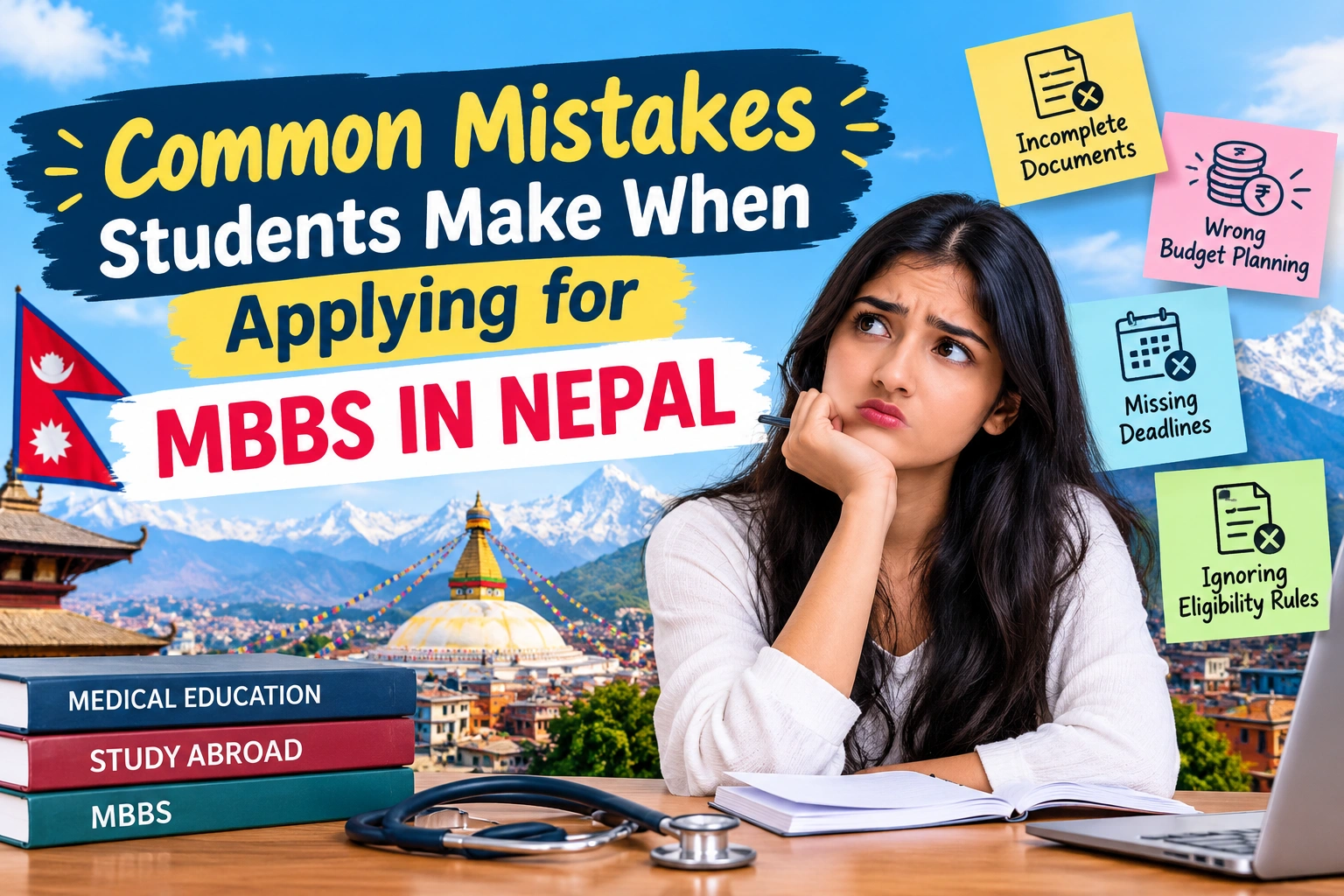
For many Indian students, MBBS in Nepal looks straightforward at first. Nepal is close to India, medical education is commonly available in English, and students often feel that the admission process should be easier than dealing with multiple options in other countries.
That assumption can create problems. A student may check the fee, speak to an agent, pay a booking amount and think the difficult part is over. But medical admission isn't like booking a regular university course. Eligibility, NEET requirements, university affiliation, recognition, clinical training and future registration all matter. Miss one detail today, and it can become a serious headache years later. Here are some of the most common mistakes students make while applying, along with what you should check before paying anything.
1. Choosing a College Only Because the Fees Look Cheap
Low fees can be attractive. Very attractive. But the cheapest college isn't automatically the right college. Students sometimes compare only the tuition amount and ignore other costs such as hostel fees, food, examination charges, university charges, insurance, travel, documentation and personal expenses. A course advertised at one figure may therefore cost noticeably more over the full period. For MBBS in Nepal, students should ideally compare the complete estimated cost rather than asking only, "What is the tuition fee?"
As a rough planning figure, students may see total MBBS expenses in Nepal quoted around ₹45 lakh to ₹75 lakh depending on the college, fee structure, living arrangements and other expenses. These are only broad estimates, not a universal fee range. Always ask the college for the current official fee schedule before making a payment. Also ask whether fees are payable annually, semester-wise or in another schedule. Small details matter here.
2. Assuming NEET Isn't Required
This is one of the biggest mistakes Indian applicants make. Some students hear that Nepal is a neighbouring country and assume they can apply without NEET. That's not a safe assumption. Indian students planning to pursue medical education abroad need to check the applicable NEET and NMC requirements for their admission year.
The official NEET UG website should be checked for the current examination information, while NMC's foreign medical education guidance should also be reviewed. NMC currently maintains a dedicated NEET-UG information section and its regulations cover foreign medical graduates. So don't rely on a WhatsApp message saying, "NEET is not needed for Nepal." Check the rule yourself.
3. Not Checking the College's Recognition and Regulatory Status
A college can have a good-looking website, modern photographs and plenty of social media posts. That doesn't answer the question that actually matters: is the medical qualification suitable for your future plans? Before admission, check the institution's status with the relevant Nepalese authorities and also review the requirements applicable to Indian students under the National Medical Commission (NMC).
NMC's Foreign Medical Graduate Licentiate Regulations 2021 set requirements around the foreign medical qualification, training, internship and other conditions for graduates who want to practise in India. You can also search the institution in the World Directory of Medical Schools. But there's an important catch: being listed in WDOMS by itself does not mean that a school is recognised, accredited or endorsed by WDOMS or its publishers. That's a detail students often miss.
4. Believing "WHO Approved" Means Everything Is Sorted
You've probably seen phrases like "WHO approved college" in advertisements. Be careful with that wording. WHO itself has clarified that it doesn't grant recognition or accreditation to medical schools. Recognition and accreditation are matters for the appropriate national authorities. So if an admission counsellor says a college is "WHO approved," don't stop your research there. Ask what the statement actually means and which official authority recognises the institution. A better approach is to check multiple sources instead of trusting one promotional claim.
5. Ignoring the University Affiliation
A medical college doesn't operate in isolation. Its university affiliation and the degree-awarding structure are worth checking before admission.
Ask simple questions:
- Which university awards the MBBS degree?
- Is the college currently affiliated with that university?
- Is the affiliation valid for the complete duration of your course?
- Who conducts the examinations?
- Which authority regulates medical education in Nepal?
- Will the qualification allow registration as a doctor in Nepal?
These aren't boring formalities. They can affect your career later. For students planning to return to India, the foreign medical graduate requirements published by NMC should be read before selecting the college, not after completing the degree. NMC's current rules page includes the Foreign Medical Graduate Licentiate Regulations and related FAQs.
6. Not Understanding the Course and Internship Duration
Another common misunderstanding is treating MBBS as simply a five-year classroom programme. Medical education includes clinical training and internship requirements, and the exact structure should be confirmed with the institution before admission. NMC's FMGL FAQ states that the foreign medical course and internship have specific duration and training requirements, including a minimum twelve-month internship in the same foreign medical institution under the applicable regulations. This is why you shouldn't judge a college by a sentence like "MBBS completed in five years." Ask for the complete academic calendar. Years of pre-clinical study, clinical training, examinations and internship should be clearly explained. If the admission team can't give you a proper answer, pause.
7. Assuming the Foreign Degree Automatically Means You Can Practise in India
This is perhaps the most expensive misunderstanding of all. Finishing an MBBS abroad doesn't automatically mean you can start practising medicine in India. Foreign medical graduates are subject to the applicable Indian regulatory requirements, including examination and registration requirements. NMC's current regulations include the FMGL framework, and its official material states that foreign medical graduates have requirements related to the National Exit Test or another mandated test once applicable. The exact regulatory position can change, so students shouldn't rely on an old YouTube video or a senior's experience from several years ago. Check the latest NMC notifications before admission.
8. Comparing Colleges Without Looking at Clinical Exposure
A beautiful campus is nice. A good hospital setup is more important for a medical student. During your comparison, ask about the attached teaching hospital, approximate patient flow, clinical departments, ward exposure and practical training opportunities. This matters because MBBS isn't just about passing written examinations. You need repeated exposure to real clinical situations. Honestly, this is one area students don't discuss enough. They spend hours comparing hostel rooms but sometimes barely ask about clinical training. Do the opposite.
9. Forgetting About Hidden and Living Expenses
Tuition isn't your only expense. Depending on the city and lifestyle, students may spend additional money on hostel accommodation, food, transportation, books, medical equipment, examination charges, university-related fees, travel between India and Nepal and personal expenses. A student budgeting ₹50 lakh for the entire course should therefore understand exactly what that figure includes. Ask the college to provide a written fee breakup. If an agent gives you a total figure, ask for the college-issued document behind it. No confusion later.
10. Paying an Agent Before Verifying the Documents
This happens more often than you'd think. Students sometimes transfer a large amount because an admission consultant says that seats are "almost full." Pressure tactics can make students rush. Don't. Before paying, verify the admission letter, fee structure, refund policy, college details, university affiliation and payment instructions. Make sure the bank account or payment route is officially connected to the institution or clearly authorised. Keep copies of every receipt, email and document. If somebody says, "Pay today or your seat will disappear," take a breath first.
11. Not Checking the Latest Admission Rules
Admission rules can change from one academic session to another. A requirement that applied to students admitted several years ago may not be the same for a new batch. NMC's website currently lists updates and amendments to medical education regulations, including material dated 2025 and 2026, which is a good reminder that students should check current rules rather than old articles.
For the latest MBBS in Nepal admission information, students should cross-check college notices, university information and Indian regulatory requirements before finalising their choice. You can also use MBBS in Nepal as a starting point for researching colleges, fees and admission-related information.
A Simple Checklist Before You Apply
Before paying your admission fee, keep this checklist handy:
- Confirm your NEET eligibility and current requirements.
- Check the college's current recognition and affiliation.
- Search the institution in WDOMS, but don't treat listing alone as accreditation.
- Read the latest NMC foreign medical graduate rules.
- Ask for the complete fee structure.
- Confirm the duration of study and internship.
- Check clinical training and teaching hospital facilities.
- Understand the rules for medical registration in Nepal.
- Check what you'll need to do after returning to India.
- Get all important promises in writing.
- Read the refund and cancellation policy.
- Keep copies of receipts and admission documents.
FAQs
Is NEET required for Indian students applying for MBBS in Nepal?
Indian students should check the NEET requirement applicable to their admission year and the current NMC rules before applying. Don't rely on an agent's verbal assurance.
Is MBBS in Nepal recognised in India?
A foreign medical qualification isn't automatically enough for registration in India. Graduates must satisfy the applicable NMC requirements, including the requirements concerning the foreign medical qualification, training, internship and mandated licensing examination.
How much does MBBS in Nepal cost?
A broad planning range often quoted for the complete course is around ₹45 lakh to ₹75 lakh, but the actual amount varies by college and personal expenses. Always obtain the latest official fee structure before making financial decisions.
Is WDOMS listing enough to select a medical college?
No. WDOMS itself states that listing doesn't mean recognition, accreditation or endorsement. Use it as one research source, then verify the college's regulatory and university status separately.
How long does MBBS in Nepal take?
The total timeline depends on the specific university's structure and internship arrangement. Students should ask for the complete course and internship schedule before admission rather than relying on a simple "five-year MBBS" claim.
What should I check before paying the admission fee?
At minimum, verify the college, university affiliation, current fee structure, refund policy, admission eligibility, course duration, clinical training, internship arrangement and the NMC requirements that may affect your future practice in India.
Conclusion
Choosing MBBS in Nepal can make sense for some Indian students, but the decision shouldn't be based on proximity or a low advertised fee alone. Look beyond the brochure. Check the university. Check the regulations. Ask uncomfortable questions if something isn't clear. Most admission mistakes are avoidable. Take a little extra time before paying, verify information through official sources, and compare colleges based on education, clinical exposure, total cost and future registration—not just the promise of an easy admission. That small amount of research now can save you a much bigger problem later.