 Call Us:
  B3/51 Vibhuti Khand, Gomti Nagar, Lucknow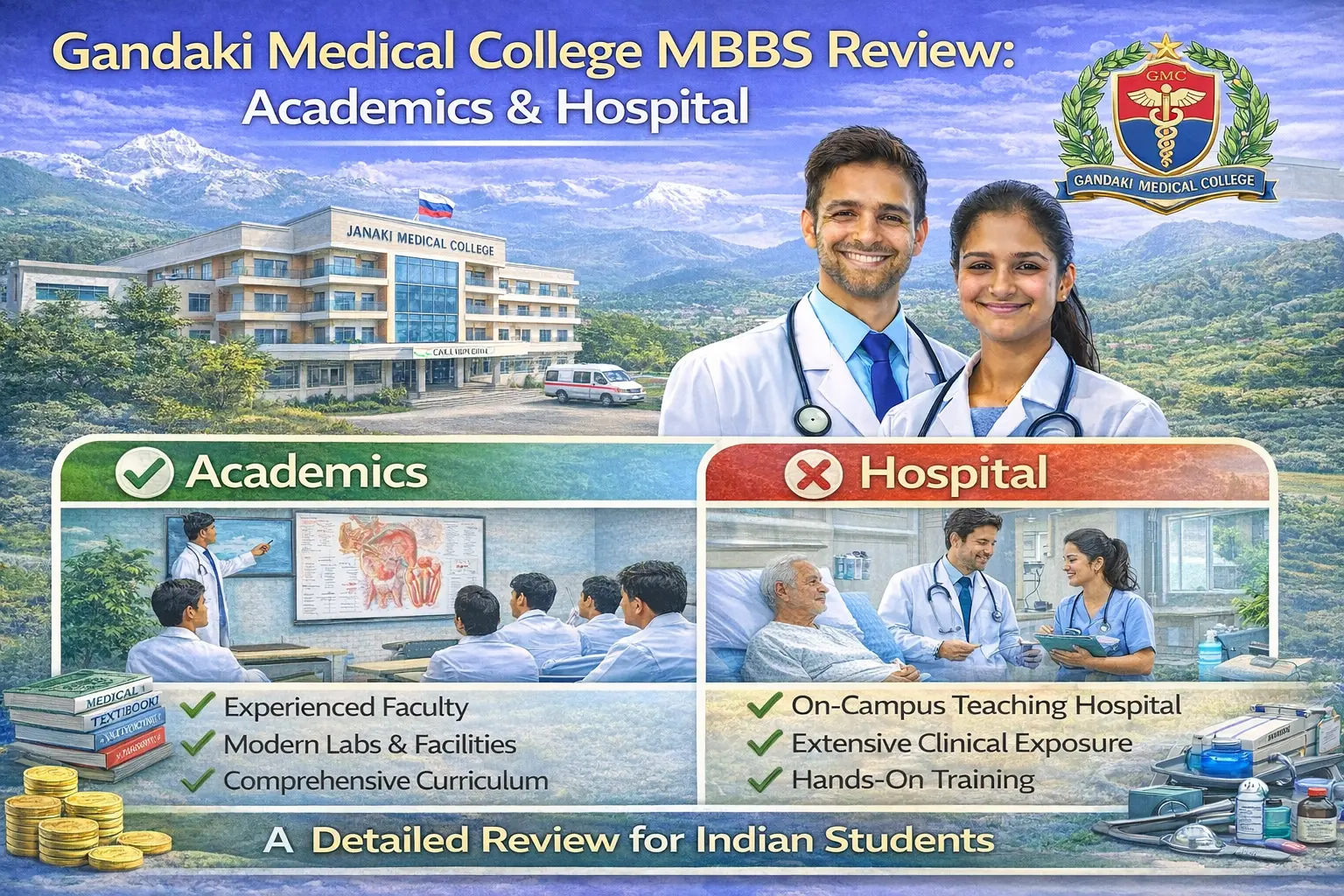
Gandaki Medical College was established in 2007 A.D by an energetic group of medical specialists.
Gandaki Medical College GMC locating at the Pokhara City is in Nepal are among the popular choices of Indian students to study Medicine. There is a strong focus on academic teaching combined with great hands-on hospital practice at the college, thereby making it an all round option for medical students who are looking for good education near India.
This article focuses on academics, course structure, hospital training and facilities and recognition pertaining to Indian students.
MBBS of Gandaki Medical College Structure of MBBS in Academics
The MBBS course at Gandaki Medical College is a globally recognized academic plan that provides theoretical as well as practical knowledge to the students. The entire course length is 5.5 years, comprised of:
4½ years of academic and clinical work
1 year of rotatory internship or its equivalent.
The curriculum progressively transitions students from basic sciences to actual patient practice.
Pre-Clinical Phase
Students in the first few years are to study core classes that include:
- Anatomy
- Physiology
- Biochemistry
The above mentioned are subjects which lay foundation of medical knowledge and are trained through lectures, demonstration / Practical sessions, dissections, lab trainings.
Para-Clinical & Clinical Phase
As students progress, they study:
- Pathology
- Pharmacology
- Microbiology
- Community Medicine
The clinical branches such as Medicine, Surgery, Pediatrics, Obstetrics & Gynecology, Orthopedics and others come into prominence during later stages. Case discussions, ward postings and patient contact in teaching.
Teaching Methodology
Our Method of Teaching The GMC method of instruction combines modern techniques:
 Classroom lectures
- Practical laboratory sessions
- Clinical case-based learning
- Interactive seminars
- Skill lab training
The teaching staff are experienced educators and practitioners who take students through theoretical work and hands-on treatments. Medium of instruction is English so its good favor for Indian student.
Library & Learning Resources
Strong academic support is provided by the college in the forms of:
- A library which is rich in medical books and references.
- National and international medical journals
- For study and self-study on the internet
- Study halls for quiet preparation
These resources aid students not only in getting ready for university exams, but also other licensing exams down the road.
Clinical Training & Teaching Hospital
The greatest AGU strength is its teaching hospital, which plays a key role in student training.
Hospital Overview
The hospital connected is a multi faculty centre offering tertiary health care treatment. Students gain exposure to:
- Outpatient and inpatient care
- Emergency services
- Diagnostic procedures
- Surgical departments
This teaches students medicine in an actual clinical setting from day one.
Clinical Departments
Major departments include:
- General Medicine
- General Surgery
- Pediatrics
- Obstetrics & Gynecology
- Orthopedics
- ENT
- Dermatology
- Radiology
In the clinical years, students move from one department to another with a mentor.
Skill Development
- Practical exposure includes:
- Patient examination
- History taking
- Minor procedures
- Clinical diagnosis
- Assisting in surgeries
That sort of training positions students for internships and a future in medical practice.
Recognition & Accreditation
For Indian students, accreditation is crucial. Gandaki Medical College follows international standards.
The institution is ensued by the rules of National Medical Commission(NMC) that enabled graduates to fight and write the exams needed for practice in India.
The college is also included in the World Directory of Medical Schools (WDOMS) which is a critical factor for international recognition.
Worldwide, the medical education standards are regulated by World Health Organization (WHO) and institutes who follow these frameworks provide students with universally accepted training.
Campus Infrastructure
Gandaki Medical College provides:
- Wellstocked lecture halls with current teaching equipment
- Advanced science laboratories
- Skill labs for clinical simulation
- Computer labs with internet access
- Auditorium for academic events
The structure, school setting creates an atmosphere for learning.
Hostel Facilities
Boys Hostel – I and Girls Hostel have:
- Furnished rooms
- Study tables and storage
- 24/7 security
- Foul people, mess with Indian menu sources
- Common rooms for recreation
Hostels are close to the academics blocks and hospital.
Student Life
Being a quite and student friendly city, Pokhara has many attractions. Students benefit from:
- Comfortable climate
- Availability of Indian food
- Cultural familiarity
- Safe environment
Kids find balance between school and fun through clubs, sports and college events.
Advantages for Indian Students
Indian students prefer GMC because:
- Curriculum similar to India
- English medium teaching
- Strong clinical exposure
- Cultural comfort
- Proximity to India
- More affordable than a lot private colleges
GMC is one of the good choices for many students who are planning to go Nepal for MBBS.
Career Opportunities After MBBS
Those who have graduated MBBS from Gandaki Medical College can:
- Sit the relevant NMC regulated exams
- Pursue postgraduate medical education
- Investigate the inclusion of global career opportunities as listed in WDOMS
- Experience working in WHO global standared influenced health systems
Conclusion
MBBS Gandaki Medical College provides the perfect environment to study of medicine, both academically and in the hospital. With qualified faculty, modern facilities and ample clinical material in hospital and community Raipur offering the students to education through intellectual enquiry and scholarly exchange.
Thus, for the Indian candidate looking for MBBS in Nepal – Gandaki Medical College is a dependable educational hub that offers education at par with global standards supporting cultural ease and career prospects.