 Call Us:
 B3/51 Vibhuti Khand, Gomti Nagar, Lucknow
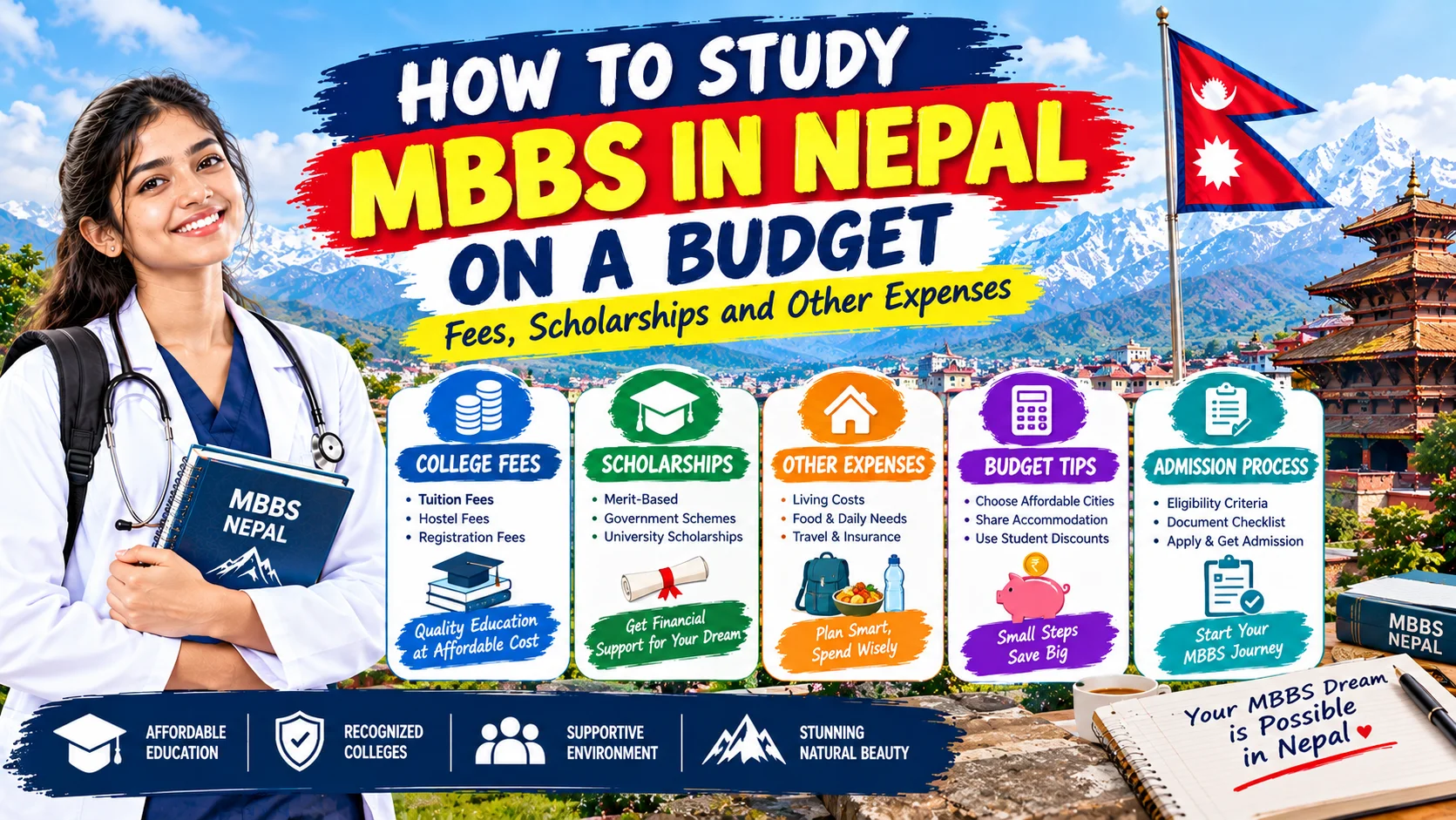
For Indian students, MBBS in Nepal can be a viable option because of the geographical proximity, similar food and culture and opportunity to study medicine in a neighboring country. Unlike other countries, studying MBBS in Nepal does not mean spending a huge amount on tuition, accommodation and food. However, selecting Nepal only on the basis of affordability is not justified. One should assess the total cost of the medical degree, the admission process and the expenses involved throughout the period of study. Most of the time, families compare medical colleges only on the basis of tuition fees and fix their budget accordingly. Tuition is only one expense among many. Other fees like hostel and examination fees, deposits, insurances, travel, and other expenses can vary significantly from college to college and can inflate the total cost of the degree. A proper budget should be set for the entire course and not only for the first year. It is important to consider a college's fees only after assessing other aspects like facilities, location, accreditation, infrastructure, ranking, etc. This guide helps you assess all these aspects as well as estimate your expenses, find scholarships and avoid unnecessary spending.
What Attracts Indian Students to Study MBBS in Nepal?
For a variety of reasons that relate mainly to proximity, culture and travel convenience, MBBS programs in Nepal appeal to a number of Indian students. Parents, too, find it easier to adjust to Nepal and visit their children. Another thing to consider is the language of instruction. Many medical colleges in Nepal use English for instruction, textbooks and assessments. Although students may have to learn basic Nepali/local language phrases to interact with patients during their clinical training. The specifics of the teaching arrangements should be clarified prior to admission. Familiarity with the processes doesn’t always mean that a college is a good option. Students must evaluate other factors such as the college’s recognition status, teaching hospitals, clinical exposure, admission regulations and fee. Check the information provided on this portal and verify with the University and appropriate agencies.
How Much Does MBBS in Nepal Cost?
The total cost varies between the Universities and is dependent on the college’s infrastructure, facilities and course duration. To give an estimate, costs can be classified into tuition, living and miscellaneous expenses. This gives a better picture of the total financial burden on the student’s family.
Estimated Cost for MBBS in Nepal
The figures provided are broad, approximate costs and are subject to variations. The official fee is published by the University and should be paid only after consulting the latest quotation.
|
Expense |
Indicative budget |
|
Total Course Fees |
₹35 lakh to ₹65 lakh and above |
|
Hostel |
₹5,000 to ₹15,000 |
|
Food and Mess |
₹4,000 to ₹8,000 |
|
Books and stationery |
₹10,000 to ₹25,000 |
|
Transport and personal expenses |
₹2,000 to ₹5,000 |
|
Travel between India and Nepal |
Depends on city and season and frequency of travel |
|
Insurance, docs and other charges |
Depends on college and applicable conditions |
Ranges mentioned here are for budget planning purposes and don’t indicate any college will charge this much. Prices may vary college wise. Hostel and mess charges may be included in the official package. In such cases avoid including it again. The Medical Education Commission of Nepal releases information on medical education fees, scholarships and admissions. The Commission has a site with latest info and notices. The Commission explains that tuition and living expenses are two different costs and the fees approved for the educational session vary from institution to institution. Medical Education Commission of Nepal. Compare at least three colleges by their written fee schedules. Go to each admission office to get the total tuition payable over the entire course, payment dates and exclusions. Ask for admission fees, university registrations, laboratory charges, exam fees, refundable deposits and expected annual increases. What happens if a student repeats a year? What if they need to take a supplementary exam or leave the course? Families should consider colleges in less expensive urban areas and compare them to those in more expensive city areas. Depending on a college’s location, distance from urban areas and the availability of adequate clinical practice facilities, a lower living cost may assist in lowering the overall college budget.
Is a Lower Tuition Fee Always Better?
Not always. If College A charges less tuition but has separate charges for accommodation, exams and transport and College B has slightly higher tuition but includes these in their charges, the lower advertised tuition fee may not mean a lower total cost. Consider the total cost payable over the entire course rather than the course fee on the website or brochure. A fee breakdown in writing is better than a verbal assurance by an agent. Students should review a refund policy to know the terms and conditions of their money before paying the booking amount. Once the admission process is completed, and an admission offer is made, families need to know about the refund policy to recover the money if an admission offer is cancelled for visa or other reasons, or if the student becomes ineligible for admission.
Can Indian Students Get Scholarships for MBBS in Nepal?
Maybe. Scholarships can be helpful but building a financial plan around a scholarship is not prudent. Medical scholarships are usually limited and competitive and can be governed by specific eligibility conditions, entrance examinations, or governmental arrangements. Notices for admissions and scholarships are published by Nepal Medical Education Commission through its official channels. Reviewing the notices for the relevant year helps the students to understand the terms and conditions of scholarships and eligibility. Just because scholarships are offered to Nepalese citizens, it is not always the case for Indian citizens. Some institutions also may offer scholarships to Indian students. Check the terms of the scholarships and what is offered. A scholarship should specify the financial burden that will still be borne by the students.
What Should You Check before Accepting a Scholarship?
Determine if the scholarship is only for tuition or does it cover other expenses as well. Tuition waivers may not reduce hostel fees, travel expenses, or other costs. Ask how long the award is valid for. Is it only for a single year and does it require you maintain a certain academic performance to be eligible for renewal? Some awards are conditional and the amount awarded in the first year is not guaranteed for the remainder of your course.You should never give a large, non-refundable amount to an intermediary to help you get a scholarship or discounted seat. In such a case, you should always verify with the institution or the relevant authority and only then make the payment.
Other Expenses Students Often Forget While Budgeting
Tuition and hostel fees are usually listed by the college, so these expenses are easier to account for. However, the smaller expenses of daily living can put a financial strain on a family, especially if they are not financially prepared to meet them.
1. Food and Hostel Expenses
The cost of hostel accommodation is usually one of the first expenses a student has to confirm. Find out if the fee covers a shared room and if it includes utilities like electricity, the internet, laundry, and other services. Be sure to verify the rules regarding hostel accommodation. Each college has its own rules regarding hostel accommodation.How much the student spends on food depends on if he uses the college mess or cooks. Ordering food is usually more expensive compared to eating the college mess. Make sure to choose a hostel that is near the college. This reduces your daily transportation costs.
2. Travel between India and Nepal
The cost of travel is dependent upon the location of your family in India and the location of the medical college. Students from nearby states might have more affordable travel options than students from far away states.Calculate the cost of travel for the first trip to Nepal, but also include the cost of travel for holidays and for emergency visits and local transport after reaching Nepal. Set aside money for travel in your budget.
3. Books, Equipment and Other Academic Expenses
The expenses of a medical student does not only include the cost of textbooks and stationary. There is the cost of practical supplies and other academic resources. Not all reference books are necessary to be bought immediately. You must discuss with your faculty member as to which books are necessary. Also check if the college has the book/reference which is necessary and if the college provides it to the students. To save the cost of text books and reference materials you may consider sharing and buying used books. Avoid cutting expenses on essential clinical equipment.
4. Documentation and Personal Expenses
Students need to have money set aside for the cost of various certificates and documentation. This cost also includes first year college registration, and insurance where it is applicable. This cost varies from student to student and from college to college. Personal expenses also add up and must be calculated. These include the cost of mobile phone connectivity, clothing and medical and other expenses. The tuition fee is normally paid at the beginning of the semester. There is no reason to assume that unexpected expenses of the family will be paid by the college. So keep money for unexpected expenses.
How to Prepare a Realistic MBBS Budget (Nepal)
Prepare a projected budget on a year-by-year basis, and do not accept the quote of a total expense given by a consultant. The family has the right to know the payment schedule.
|
Budget Category |
Expenses |
|
Admission Year |
First year’s tuition fee, registration, travel and other essential expenses. |
|
Academic Year |
Tuition fee, food, hostel, examination and study expenses. |
|
Clinical Training Year |
Accommodation, travel and other expenses to clinical facilities. |
|
Final Year |
Tuition, examination and travel expenses for the internship. |
|
Emergency Reserve |
Travel expenses and unforeseen health and other expenses. |
Ask your college to confirm if its course and clinical training and internship arrangements are in compliance with the Indian requirements to practise. These may also affect the total cost and duration of the course. Maintain a separate record of expenses. Keep all payment-related documentation, and admission letters. If an agent collects money on behalf of the college, confirm the payment and get a receipt.
Important Eligibility and Recognition Checks Prior to Admission
Saving money is useful only if the degree and course meet the requirements relevant to your future plans. In the case of Indian students, the regulatory checks should be done prior to the payment of non-refundable admission fees. First verify the NEET examination information and eligibility. Students of India wishing to undertake an MBBS course abroad should meet the requirements of NEET. Passing NEET does not assure admission in any college of Nepal. Second, read the relevant regulations of the National Medical Commission (NMC). The Foreign Medical Graduate Licentiate Regulations, 2021, prescribe requirements related to duration of course, medium of instruction, curriculum, clinical training and internship. You must check the rules pertaining to your admission and graduation and then take a decision regarding enrollment. Third, check if the medical college is listed in the World Directory of Medical Schools (WDOMS). The school’s presence in the directory helps to substantiate the school’s identity but, in itself, does not signify the school’s recognition or right to practice in India. The World Health Organization (WHO) can also be consulted for other information related to health. However, do not consider a claim of WHO approval as an alternative to verifying the relevant Indian laws and the medical school’s current status. MBBS in Nepal can be researched for other information related to admission. Check with the college and the concerned official authorities before finalizing the details.
PLEASE READ CAREFULLY BEFORE SIGNING THE AGREEMENT
The first is assuming that the tuition fee covers all the expenses. Always ask for a written break-up of all fees. Second is the case of families who arrange money only for the first year of the course. You need to plan the future expenses as well. Consider how the family would manage if the income of the earning member of the family changes or an unforeseen big expense occurs. The third is accepting scholarship claims without written confirmation. It is good practice to wait for the college to confirm scholarship eligibility and provide the conditions before including the promised discount in your financial calculations. Finally, do not rush into making an admission decision. Never make an admission decision if someone pressures you to pay and “secure” a supposedly limited seat. A few more days spent checking the fee structure and the relevant laws can prevent making an erroneous admission decision.
Frequently Asked Questions
Is MBBS in Nepal affordable for Indian students?
It can be for some families, mainly because of the proximity of Nepal to India and the ease of travelling back to India. But the affordability really depends on the family’s financial status. Compare the total cost of the program to make an informed decision.
Can Indian students get scholarships for MBBS in Nepal?
There are scholarships available, but the eligibility is strict. Indian students should go through the recent notifications of the Medical Education Commission and check with individual colleges about their scholarship programs.
How can I cut down the cost of MBBS in Nepal?
Avoid unnecessary spending. Compare the total cost of different colleges. Choose colleges that allow students to access their libraries. Make travel arrangements in advance. See if there are any verified scholarship programs available before finalizing your budget.
Is NEET compulsory for MBBS in Nepal?
Yes, Indian students who wish to study medicine in Nepal are required to satisfy NEET. They should refer to the official NEET and NMC guides, instead of relying on informal suggestions of an agent.
Does a WDOMS listing allow me to practice in India?
No. A WDOMS listing does not allow medical registration in India. Students need to meet relevant NMC requirements, check the university and the course prior to admission.
Conclusion
Studying MBBS in Nepal on a shoestring budget means more than identifying a medical college with a low advertised fee. The real challenge is to break down the total cost, identify legitimate scholarships, and confirm the university and the course meet your future career goals. First, prepare a total budget. Compare total costs and put aside some money for an emergency. Verify every scholarship and admission offer and read the latest NEET and NMC guidelines before taking any decision. Making a planned decision means your family can reduce unexpected expenses. The goal should not be to find the cheapest medical college. The goal should be to find a medical college that meets your budget and provides you with proper medical training to help you achieve your goal of becoming a doctor.