 Call Us:
  B3/51 Vibhuti Khand, Gomti Nagar, Lucknow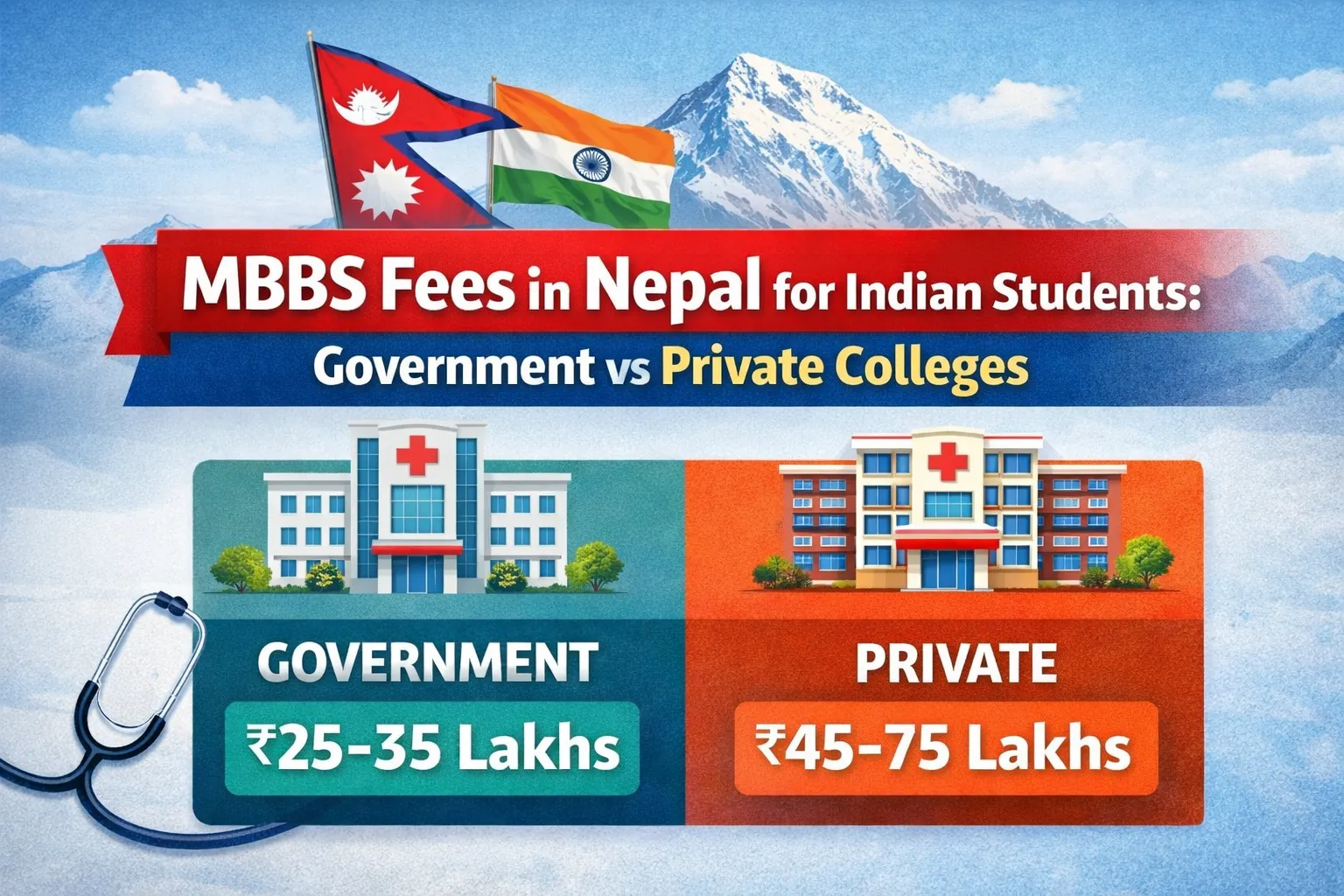
MBBS study in Nepal has become a popular choice for Indian students due to the increasing competition for medical seats in India. Nepal offers a regulated medical degree at a lower cost than private colleges in India. This guide provides Indian students information about tuition fees, cost-effective colleges, admission processes, and regulatory approvals for 2026.
Why Study MBBS in Nepal?
Nepal has emerged as a top destination for Indian medical aspirants, offering:
- Low-cost Fees: Tuition fees in Nepalese medical universities are lower than most private colleges in India. MBBS can be pursued for INR 20–40 lakh for the entire course.
- English-Medium Instruction: Most colleges teach in English, making it easier for Indian students to study MBBS in Nepal.
- Indian-Aligned Curriculum: The curriculum is similar to India’s, aiding preparation for exams like the NMC Screening Test.
- Nearness and Accessibility: Nepal’s proximity allows easy travel and maintaining family connections.
- International Credibility: Graduates from WHO-recognized colleges listed in WDMS can practice medicine internationally.
Eligibility Criteria for Indian Students
Indian students must meet the following criteria to pursue MBBS in Nepal:
- Age: 17–25 years.
- Academic Qualification: Overall graduate with a background in Physics, Chemistry, and Biology.
- Qualifying Marks: Minimum 50% in PCB for general category, 40% for reserved categories.
- NEET Qualification: Candidates must qualify NEET.
Note: Eligibility requirements may change; always check the college website and NMC guidelines.
Nepal MBBS Fees: Government vs Private Colleges
Government Colleges
Government medical colleges in Nepal are cost-effective and offer good academics:
|
College |
Tuition Fee (INR) |
Hostel & Other Fees (INR) |
|
B.P. Koirala Institute of Health Sciences (BPKIHS), Dharan |
30-35 lakh |
3-5 lakh |
|
Tribhuvan University Institute of Medicine, Kathmandu |
25-30 lakh |
2-4 lakh |
Private Colleges
Private colleges have modern infrastructure but higher fees:
|
College |
Tuition Fee (INR) |
Hostel & Other Fees (INR) |
|
Kathmandu University School of Medical Sciences (KUSMS), Dhulikhel |
35-40 lakh |
3-5 lakh |
|
Manipal College of Medical Sciences, Pokhara |
30-32 lakh |
2-4 lakh |
|
Universal College of Medical Sciences (UCMS), Bhairahawa |
28-32 lakh |
2-4 lakh |
Tip: Fees may vary with policy changes and currency fluctuations. Always check the official college website.
Admission Process for Indian Students
Steps to pursue MBBS in Nepal:
- Qualify NEET: A valid NEET score is required as per NMC guidelines.
- Shortlist Colleges: Research colleges based on fees, faculty, facilities, and recognition.
- Apply Online/Offline: Submit forms on college website or through authorized representatives.
- Document Verification: Submit NEET scorecard, transcripts, passport, medical certificate, and other required documents.
- Seat Confirmation: College issues admission letter; fee payment confirms the seat.
- Student Visa: Obtain from Nepalese embassy or consulate in India.
Note: Early application is recommended as seats fill quickly.
Duration of MBBS in Nepal
- 4 Years 6 Months: Academic study including pre-clinical, para-clinical, and clinical phases.
- 1-Year Internship: Compulsory in affiliated hospitals (can be completed in India).
Recognitions and Approvals
Indian students must ensure the college is recognized by:
- WDMS – International accreditation.
- WHO – Internationally recognized medical colleges.
- NMC – Required to practice in India post-MBBS.
- NEET – Mandatory for Indian students seeking admission abroad.
Affordable Options: Key Tips
- Prefer government colleges (BPKIHS, Tribhuvan University) for lower fees.
- Look for merit-based scholarships.
- Choose colleges with low hostel and living costs.
- Research and compare degrees, fees, recognition, faculty, and facilities.
- Confirm recognition with WDMS and NMC.
Benefits of Studying MBBS in Nepal
- Low Fees: Cheaper than private colleges in India.
- Merit-Based Admission: No capitation or donation fees.
- Cultural Familiarity: Easier adaptation for Indian students.
- Global Validity: Degrees recognized worldwide.
- Clinical Exposure: Practical experience in teaching hospitals.
Challenges to Consider
- Few Seats Available: Popular colleges fill quickly; early application is essential.
- Hilly Terrain: Some colleges require acclimatization.
- NMC Screening Test: Required to practice in India after MBBS.
Conclusion
Nepal MBBS is a cost-effective and quality option for Indian students. With NEET qualification and verification via WDMS, WHO, and NMC, students can pursue their medical career without high fees or limited Indian seats.
Nepal provides affordability, quality education, and global recognition, making it an ideal choice for Indian medical aspirants in 2026.