 Call Us:
  B3/51 Vibhuti Khand, Gomti Nagar, Lucknow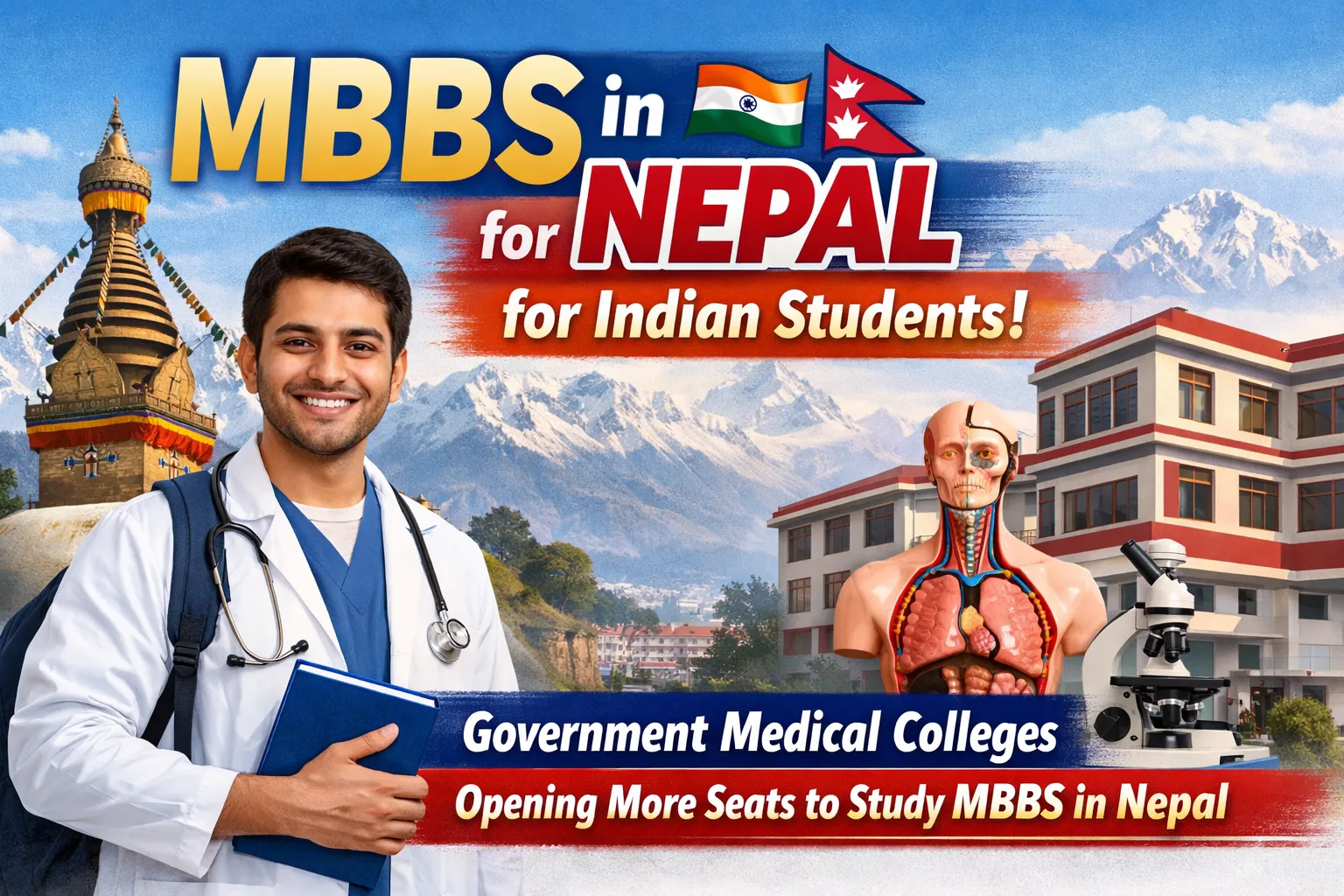
Introduction
While MBBS in Nepal is already a hot topic among Indian students, 2026 holds even more significance due to one major reason — an increase in the number of MBBS seats, especially in government medical colleges. With India having a poor ratio of 1 seat for every 90 students, a lot of aspirational students have realized that getting a medical seat in India can be extremely difficult and costly. Because of this, many students are now considering Nepal as a better option with fewer barriers and more affordable education.
MBBS in Nepal for Indian student admission is not only a backup option anymore. Due to quality education, a standardized curriculum, and increasing chances of admission, it is becoming a strategic decision. The growing number of government medical colleges and increased seat availability are helping many students move closer to their dream of becoming a doctor.
Update: MBBS Seats Increase in Nepal (2026)
One of the most significant changes for 2026 is the increase in the total number of MBBS seats across Nepal. To meet the rising demand for medical education, the government and relevant authorities have increased intake capacity.
This increase in seats means:
- More opportunities for Indian students
- Less competition compared to previous years
- Higher chances of getting admission in good colleges
Earlier, many students could not get admission due to limited seats. With the expansion of seats, Nepal has now become a more accessible option for MBBS.
Role of Government Medical Colleges
Government and semi-government medical institutions are playing a vital role in this expansion in Nepal. These colleges offer experienced faculty, quality education, and strong hospital facilities.
Some of the top institutions include:
- B. P. Koirala Institute of Health Sciences
- Institute of Medicine, Tribhuvan University
- Karnali Academy of Health Sciences
These universities are continuously upgrading infrastructure, increasing seat capacity, and providing better clinical exposure to students.
High-quality education at low cost is the main reason why government colleges are highly preferred compared to private colleges.
Do More Seats Help Indian Students?
Higher Admission Chances
More MBBS seats directly increase admission chances for Indian students. Students who previously could not secure a seat now have better opportunities.
Reduced Pressure Compared to India
In India, lakhs of students compete for limited government seats. With increased seat availability, Nepal offers a comparatively less competitive environment.
Better Access to Quality Education
Government medical colleges in Nepal provide modern infrastructure and quality education. With more seats, more students can benefit from these facilities.
Affordable Fees in Government Colleges
Affordability is one of the most important reasons students choose to study MBBS in Nepal. Tuition fees in government medical colleges are significantly lower than private institutions.
The cost of MBBS in Indian private colleges can exceed ₹1 crore, while government colleges in Nepal are much more affordable. This makes medical education accessible for middle-class families.
Additionally, the cost of living in Nepal is also relatively low, reducing the overall expense.
Increase in Scholarship Opportunities
Another advantage of increased seats is the rise in scholarship opportunities. Government medical colleges offer scholarships based on merit.
These scholarships help:
- Reduce financial burden
- Support deserving students
- Encourage academic excellence
With these opportunities, academically strong students can pursue MBBS at a lower cost.
Seat Reservation for International Students
Many Nepalese medical colleges reserve seats for international students, including Indians. This provides a fair opportunity for Indian students to secure admission without competing entirely with domestic applicants.
MBBS in Nepal 2026: Admission Process
The admission process for MBBS in Nepal is simple and transparent.
Step-by-Step Process
Step 1: Qualify NEET
As per National Medical Commission guidelines, Indian students must qualify NEET.
Step 2: Apply for Admission
Students can apply directly to medical colleges or through centralized counseling conducted by Nepal medical authorities.
Step 3: College and Seat Category Selection
Students can choose from:
- Government colleges
- Scholarship seats
- Private colleges
Step 4: Document Verification
Students need to submit academic documents, NEET scorecard, and identity proof.
Step 5: Confirm Admission
After verification, students receive an admission letter and can proceed with fee payment and travel arrangements.
Indian students do not require a visa to study in Nepal.
Eligibility Criteria for Indian Students
The eligibility requirements to pursue MBBS in Nepal are:
- NEET qualification is mandatory
- 10+2 with Physics, Chemistry, and Biology
- Minimum 50% marks (General category)
- Minimum age of 17 years
Fulfilling these criteria is essential for admission and future medical registration in India.
Course Structure and Duration
The MBBS program in Nepal follows a structure similar to India:
- 4.5 years of academic study
- 1 year of internship
- Total duration: 5.5 years
This ensures students gain both theoretical knowledge and practical hospital training.
MBBS in Nepal | Career Opportunities After MBBS
Practice in India
Students must clear the licensing exam conducted under the National Medical Commission to practice in India.
Practice in Nepal
Students can also appear for licensing exams conducted by Nepal’s medical authorities to practice locally.
Higher Studies Abroad
Graduates can pursue postgraduate studies in countries like USA, UK, Australia, and Canada by clearing respective exams.
Challenges to Consider
Although the increase in seats is beneficial, students should consider a few challenges:
- High competition for top government colleges
- Limited scholarships
- Importance of choosing a recognized institution
- Strict compliance with NMC guidelines
Careful planning and research are necessary before taking admission.
Why MBBS in Nepal is Gaining Popularity
With the increase in government medical seats, Nepal has become more accessible. Affordable education, cultural similarity, and recognized universities make it a preferred destination for Indian students.
It serves as a reliable alternative for students who find it difficult to secure admission in India.
Conclusion
In 2026, the increase in MBBS seats in Nepal government medical colleges presents a major opportunity for Indian students. Better admission chances, affordable education, and quality training are making Nepal one of the most preferred destinations for medical studies.
MBBS in Nepal for Indian student admissions offers a clear pathway to building a successful medical career, especially for those who qualify NEET but face challenges in India.
By selecting a recognized university and following National Medical Commission guidelines, students can confidently pursue MBBS in Nepal and achieve their goal of becoming a doctor.