 Call Us:
  B3/51 Vibhuti Khand, Gomti Nagar, Lucknow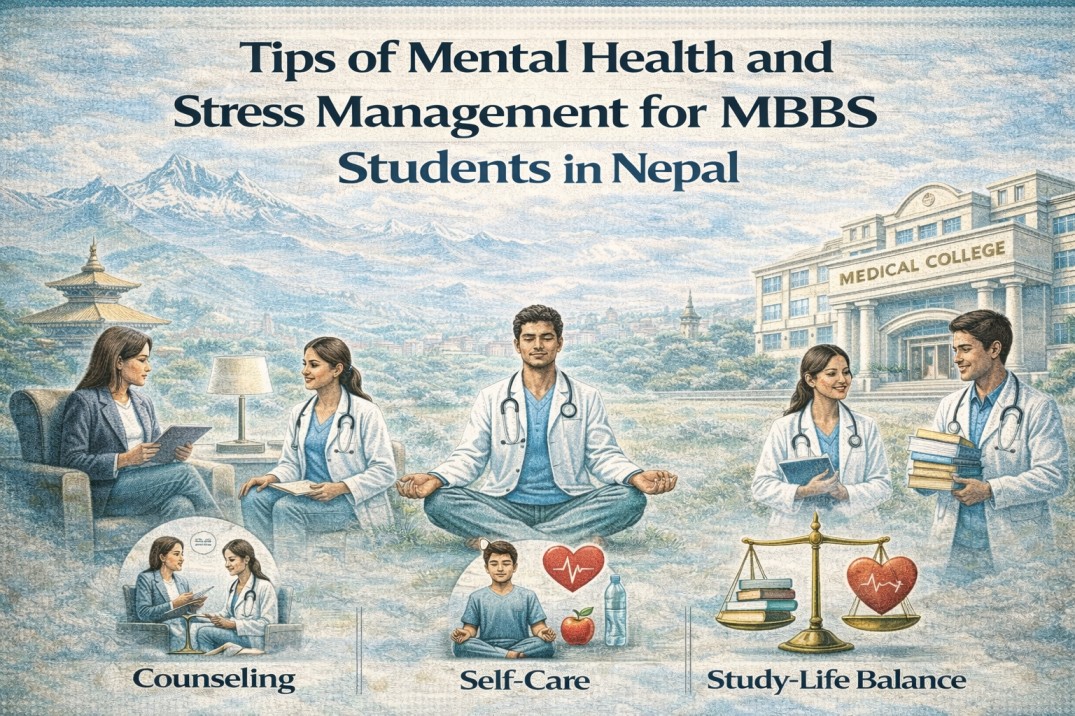
MBBS in Nepal is becoming a favorite destination for Indian, Bangladeshi as well as international students who want to study medical abroad thanks to its quality education, affordable fees and facilities provided to the students. But the stressful routine, late night studying schedules, taxing duties in wards and exam pressures could take a heavy toll on mental well-being. It is really important for you to keep that balance between your academic lives and personal lives if you want to succeed long term as well as be happy over all.
For more information about MBBS study in Nepal, you can also visit at MBBS in Nepal.
Common Stressors for MBBS Students
MBBS students are exposed to multiple stressors which affect mental health:
- Academic Overload:Heavy curriculum, constant testing and high standards drive students to madness.
- Clinical responsibilities: Attending ward rounds, interacting with patients and procedural obligations add both responsibility and pressure, especially for junior clinical students.
- Exam Pressure: Preparing for MBBS along with exams for NExT, USMLE or PLAB.
- Culture Adjustment: Getting adjusted being in a new country or culture, different food and language can cause homesickness or social stress.
- Sleep and Fatigue: Erratic sleep because of cramming into the wee hours may exacerbate stress and decrease concentration.
Early identification of these stressors is important for proper treatment.
Symptoms of Stress and Mental Health Issues
Students can recognize the warning signs of stressing out or plummeting mental health:
- Ongoing or chronic anxiety Ongoing feelings of being overwhelmed COMMUNITY CONSENT Some members are calling for the Auckland Highland Games and Gathering Committee to resign in the wake of last month’s rained-out games.
- Difficulty concentrating or retaining information
- Irritability or mood swings
- Avoiding participation in social or academic opportunities
- Physical symptoms such as headaches, digestive problems or chronic fatigue
If such tendencies are detected early, it allows students to develop coping mechanisms in good times.
Effective Strategies for Stress Management
1.Maintain a Structured Daily Routine
A routine which encompasses lectures, ward duties, self-study and rest relieves tension. The post-dawn hours can be allotted to read important materials and the evenings can bang-on revision or for exam preparations!
2.Incorporate Physical Activity
Working Out, Yoga, And Playing Sports Relieve Stress Like I said before exercising and playing sports will reduce stress and increase your mood and mental alertness. Most Nepalese schools offer sports as an extracurricular activity and it is being encouraged for students take part in the annual Sports Day.
3.Prioritize Healthy Nutrition and Hydration
Having meals in equilibrium and consuming enough water is very crucial. Good nutrition increases focus, energy levels and overall resistance to stress.
4.Ensure Adequate Sleep
Sleeping 6–7 hours per day well is critical as far as memories consolidation, emotional stability and efficient learning process are concerned.
5.Practice Mindfulness and Relaxation Techniques
Meditation, deep breathing and quick mindfulness practice enable students to stay calm, focused and face the academic adversities in a better way.
6.Look for Peer Support and Social Contact
Two, making friends and getting involved in study groups is emotionally supportive and mitigates feelings of isolation. Discussing challenges with colleagues helps to normalize stress and provide effective coping methods.
7.Access Professional Help When Needed
Colleges often provide counseling services. Seeking mental health care for stress, anxiety or depressive symptoms is a necessary and normal aspect of long-term health.
Coping with Exam-Related Stress
- Divide up Study Sessions: Don’t overwhelm yourself by keeping subjects in bite sized, passable portions.
- Active Study Methods: Visual aids, flashcards and a question bank increase learning and retention.
- Timed Breaks: Use this technique in between focused work periods to avoid becoming burned out and maintain optimal productivity.
- Mock Exams: MBBS or NExT, USMLE, PLAB Mock Tests reduce stress by getting students used to the exam structure.
Testimonials from MBBS Students
- Ritu, 3rd-year MBBS:
“I think everyday meditation and structured study sessions keep me calm focused during even finals weeks.”
- Vikram, 4th-year MBBS:
“Getting in the peer forums so that they can vent out fears, doubts and suspicions and we find a lot of stress reducing.”
- Ananya, 2nd-year MBBS:
"Flexible study, exercise and rest arrangements have gradually restored my mental health and improved (my) academic performance.
Institutional Support in Nepal
He says that Nepalese medical colleges consider mental health to be important and offer:
- Counseling and mentorship programs
- Stress management and mental wellness workshops
- Access to cultural activities and recreational facilities
- Mental health guidance is WHO-compliant
Such resources enable students to keep perspective and manage academic stresses.
Conclusion
Minding mental health is equally important among MBBS students in Nepal. Effective stress management becomes both a preventive approach and an interventive strategy for students through structured routines, exercise, mindfulness, peer support and professional counseling.
Opting for NMC-approved and WDOMS-listed colleges (NMC, WDOMS) means that they are providing you quality education, as well as support systems. For detailed information, Click MBBS in Nepal.“The college will be a place not only for imparting knowledge but also the capital of cultural activities,music-dance etc. Follow the link:MBBS in Nepal.”
By focusing on the mental side of maintaining a balanced and healthy lifestyle, students are more likely to succeed academically, thrive personally and develop the resilience that is required for a long career in medicine.