 Call Us:
  B3/51 Vibhuti Khand, Gomti Nagar, Lucknow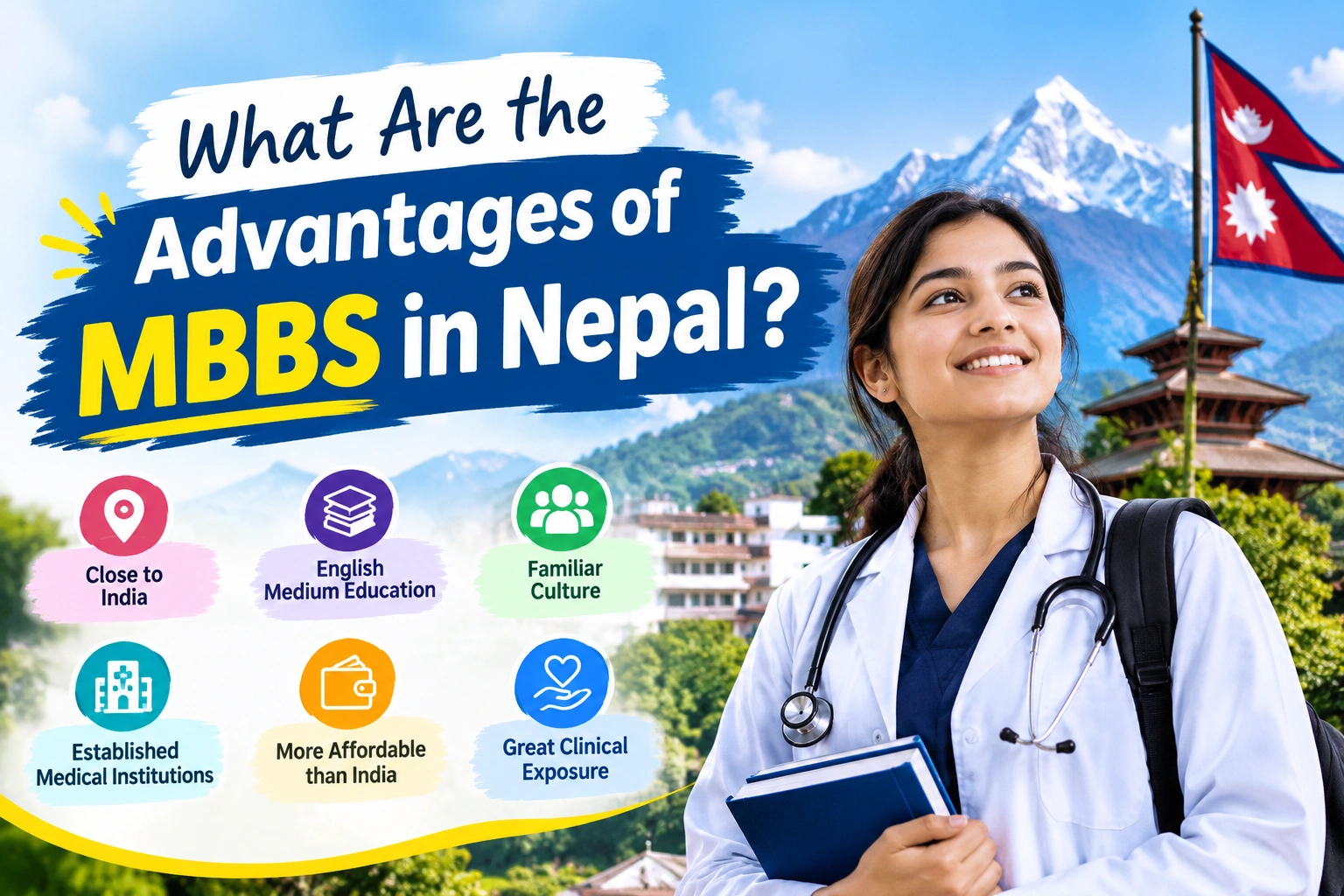
For many Indian students, choosing a medical college abroad isn’t really about going thousands of kilometres away. It’s about finding a practical option that offers good medical training, manageable living arrangements, and a degree that can fit into their long-term career plans. That’s where MBBS in Nepal gets attention. Nepal is geographically close to India, culturally familiar in many ways, and has established medical institutions offering MBBS programmes. But there’s more to the choice than just proximity.
Students considering Nepal should still check the university, admission route, fee structure, clinical exposure, and Indian regulatory requirements before paying any admission amount. A foreign medical degree has to meet the applicable rules if the graduate eventually wants to practise in India.
Why Are Indian Students Interested in MBBS in Nepal?
The first advantage is simple: Nepal is close to India. Travel between the two countries can be considerably easier than travelling to destinations that require long international journeys, and students may find it easier to stay connected with their families.
There’s also a degree of cultural familiarity. Food habits, festivals, languages in some regions, and everyday social customs can feel less unfamiliar than they might in a completely different country. For a student leaving home for the first time, that matters. Another factor is the presence of established medical institutions. Tribhuvan University’s Institute of Medicine, for example, lists MBBS as a 5.5-year programme, and Nepal has medical colleges affiliated with institutions such as Tribhuvan University and Kathmandu University. If you're researching MBBS in Nepal, don't look only at the college name. Check the actual medical school, attached teaching hospital, curriculum, clinical training and current admission rules.
The Course Duration Is Similar to a Conventional Medical Programme
A common question from parents is: “Will studying medicine in Nepal take much longer?” Generally, an MBBS programme in Nepal is structured over about 5.5 years, depending on the institution and programme structure. Tribhuvan University, for instance, currently lists MBBS duration as 5.5 years.
This usually includes classroom teaching, practical work and clinical training, followed by the required internship or clinical component according to the programme and applicable regulations. For Indian students, though, duration needs another check. The National Medical Commission's Foreign Medical Graduate Licentiate framework specifies requirements including at least 54 months of medical education and other conditions relating to training and internship for graduates seeking registration in India. So don't simply assume that “5.5 years” automatically means every regulatory condition has been satisfied.
A Major Advantage: Geographical Proximity to India
This one sounds obvious. It still deserves attention.For a medical student, travelling home during holidays, emergencies or semester breaks can be much easier when the study destination is nearby. Families may also find it easier to visit their children compared with destinations that require long flights and complicated travel arrangements. Nepal's proximity can also make the transition less intimidating for students who haven't lived outside India before. Honestly, this is one of those practical benefits people sometimes ignore while comparing countries on paper. A comfortable environment can make day-to-day student life much easier.
Medical Education With Practical and Clinical Exposure
Medicine can't be learnt properly from textbooks alone. Students need laboratories, demonstrations, patient interaction and supervised clinical exposure. Medical education in Nepal includes both theoretical and practical components, and many institutions are connected with teaching hospitals where students receive clinical training. WHO has also worked with Nepalese medical-education stakeholders on strengthening teaching approaches, including simulation-based education and healthcare training. The actual experience, however, can differ from one college to another. That's why prospective students should ask very specific questions: Which teaching hospital is attached to the college? At what stage does clinical exposure begin? How many students are in a clinical group? What departments are available? Don't settle for a brochure saying “excellent clinical exposure.” Ask for details.
Recognition and Verification Matter
A medical college being located in Nepal doesn't automatically mean its degree will meet every requirement for practice in India. This is perhaps the most important point in the entire discussion. The NMC advises Indian students planning to obtain medical qualifications abroad to check compliance with the Foreign Medical Graduate Licentiate Regulations, 2021. These rules cover areas such as course duration, medium of instruction, curriculum, clinical training and internship. Students can also check the World Directory of Medical Schools (WDOMS) for information about individual medical schools. WDOMS itself clearly says that being listed in the directory does not, by itself, mean that a school is recognised, accredited or endorsed. So, WDOMS is useful for verification and research, but doesn't treat a directory listing as the final approval for Indian registration.
NEET Is Still Relevant for Indian Students
If you're an Indian student planning to study medicine abroad, don't assume that going outside India means NEET no longer matters. The NMC states that Indian citizens and Overseas Citizens of India intending to obtain a primary medical qualification from a foreign medical institution must qualify NEET, subject to the applicable rules.
The official NTA website currently provides the NEET UG 2026 information bulletin and related notices. There isn't one universal “safe NEET score” that guarantees admission to every medical college in Nepal. Admission depends on the institution, category, foreign-student route and the rules applicable for that intake. So, if somebody promises admission solely because you have a particular NEET score, be careful.
Fees Can Be More Manageable Than Some Private Options
Cost is obviously part of the attraction. But giving one fixed figure for MBBS in Nepal would be misleading because fees can vary substantially by institution, student category and intake. Nepal's Medical Education Commission publishes fee-related information and regulates aspects of medical education, while individual institutions direct students to the Commission for updated fee structures. For budgeting purposes, students should calculate more than tuition.
Your total expense can include:
- Tuition and university charges
- Hostel or rented accommodation
- Food and daily expenses
- Registration and examination charges
- Books and equipment
- Travel between India and Nepal
- Visa or documentation-related expenses, where applicable
- Medical insurance or health-related costs
- Personal and emergency expenses
A realistic budget is better than choosing a college simply because its advertised tuition looks low.
Admission Options Are Structured Through Nepal's Medical Education System
Nepal has a formal medical education admission system, and foreign applicants may have specific procedures depending on the category under which they apply. The Medical Education Commission's entrance system provides instructions for applicants and asks foreign candidates for documents such as a passport or other specified identification and academic records.
Recent MEC admission records also show foreign candidates being matched into MBBS programmes at institutions including Maharajgunj Medical Campus, BP Koirala Institute of Health Sciences, Kathmandu University School of Medical Sciences and Manipal College of Medical Sciences. Admission schedules can change from year to year, so students should check the latest MEC notice instead of relying on an old admission calendar.
The Living Environment Can Be Easier for Indian Students
Moving abroad sounds exciting until you actually have to manage cooking, transport, accommodation, weather, communication and everyday expenses. Nepal can feel comparatively familiar for many Indian students. Vegetarian food is widely available, Indian products can often be found in major cities, and cultural similarities may reduce the adjustment period.
Kathmandu and other student centres also have established education communities. Still, don't assume every city will feel the same. Accommodation costs, transport, climate and lifestyle can differ. Visit the campus if possible, or at least speak with current students before making a final decision.
What About FMGE or NExT After MBBS in Nepal?
This is where students need to be especially careful. Completing MBBS abroad doesn't automatically give an Indian graduate the right to practise medicine in India. Foreign medical graduates have to satisfy the applicable NMC requirements and registration pathway. The NMC's current rules section includes the Foreign Medical Graduate Licentiate Regulations, 2021 and related FAQs.
The exact licensing examination framework can also change, so students shouldn't make a six-year education decision based on an old FMGE article or a YouTube video. Before admission, check the latest NMC requirements for your intended graduation year. That small step can prevent a very expensive problem later.
Advantages of MBBS in Nepal at a Glance
There are several practical reasons students consider Nepal:
- Close geographical location to India
- Relatively familiar culture and food
- Established medical universities and colleges
- Around 5.5-year MBBS structures at institutions such as Tribhuvan University
- Opportunities for practical and clinical learning
- Easier travel home for many Indian students
- Formal medical education regulation through Nepal's Medical Education Commission
- Availability of foreign-student admission routes
- Potentially manageable living arrangements compared with some distant study destinations
- Exposure to a different healthcare system and patient population
But remember, these are advantages of the destination in general. They aren't a guarantee that every medical college will provide the same academic or clinical experience.
Things Students Should Check Before Choosing a College
A low fee shouldn't be your only reason for selecting a medical college.
Before applying for MBBS in Nepal, check these points carefully:
- Whether the medical school is properly authorised in Nepal.
- Whether its current programme meets the requirements applicable to Indian foreign medical graduates.
- Course duration and internship structure.
- Medium of instruction.
- Teaching hospital and clinical exposure.
- Current tuition and hostel fees.
- Foreign-student admission rules.
- NEET requirements for Indian students.
- Latest NMC rules applicable to your batch.
- WDOMS listing and other relevant institutional information.
The NMC has specifically warned Indian students about foreign institutions whose duration, curriculum or clinical training may not comply with its requirements. That's a serious check. Do it before paying.
FAQs About MBBS in Nepal
Is MBBS in Nepal good for Indian students?
Nepal can be a practical option for Indian students because of its location, established medical institutions, cultural familiarity and structured medical education system. However, the suitability of a particular college depends on its curriculum, clinical training, fees and compliance with applicable NMC requirements.
Is NEET required for MBBS in Nepal?
Indian citizens seeking a primary medical qualification abroad are required to qualify NEET under the applicable NMC rules. Students should check the latest NTA and NMC requirements for their admission year.
How long is MBBS in Nepal?
Many Nepalese MBBS programmes are structured for around 5.5 years. Tribhuvan University's Institute of Medicine currently lists MBBS as a 5.5-year programme.
Is the MBBS degree from Nepal valid in India?
Validity for practice in India isn't based simply on the country where the degree was obtained. Foreign medical graduates must satisfy the applicable NMC requirements and registration conditions. Always check the rules applicable to your batch before admission.
How much does MBBS in Nepal cost?
There isn't one fixed fee for every medical college or foreign student. Fees are determined under Nepal's medical education framework and can vary by institution and category. Students should check the latest Medical Education Commission fee information and the college's official notice before budgeting.
Where can I check information about Nepal medical colleges?
Start with the individual university or college, Nepal's Medical Education Commission, NMC for Indian regulatory requirements, and WDOMS for medical-school information. WDOMS should be treated as a directory and research resource, not as an independent endorsement of a school.
Conclusion
For a student comparing medical education destinations, MBBS in Nepal offers some clear practical advantages: geographical proximity, cultural familiarity, established institutions, structured medical education and opportunities for clinical training. But here's the part worth remembering. The country alone doesn't decide whether your medical education will work out well. The specific college does a lot of that. Check the curriculum. Check the teaching hospital. Check the current fee. Check the internship. Then check the NMC requirements again. You can also explore more information about studying medicine in Nepal at MBBS in Nepal and verify regulatory information directly through NMC, NEET and WDOMS before taking the final admission step.