 Call Us:
  B3/51 Vibhuti Khand, Gomti Nagar, Lucknow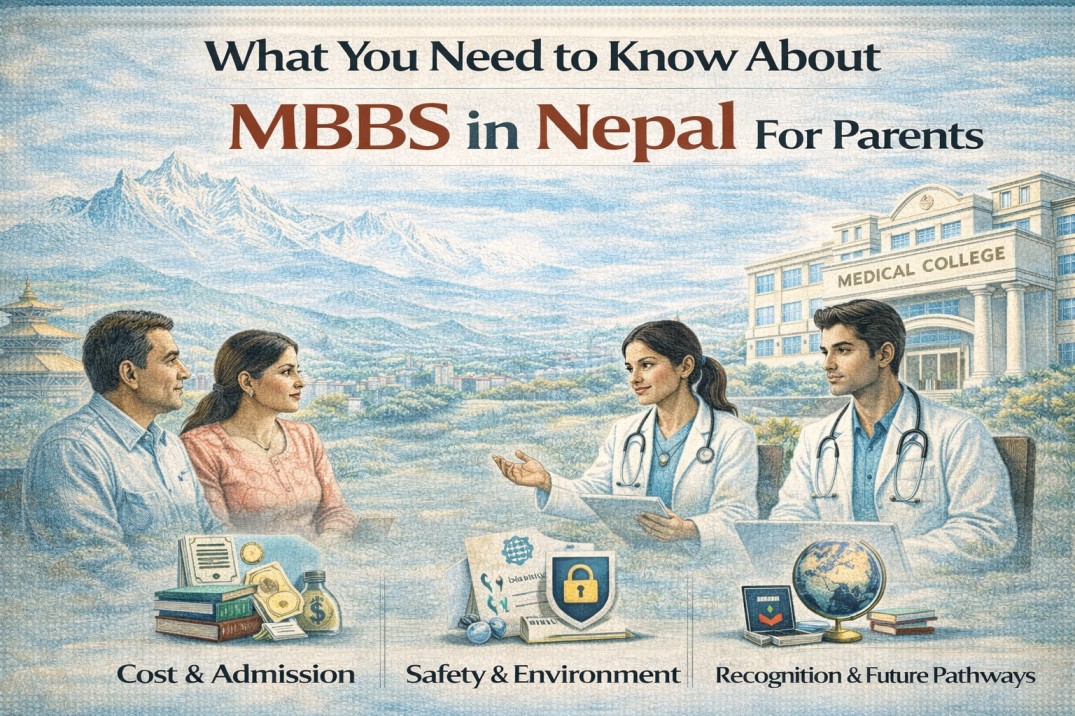
For Indian families, sending a child abroad to study medicine can be an intimidating decision. Nepal has become one of the preferred countries for MBBS studies mainly because of its close proximity to India, low tuition fees and widely respected medical programs. But many parents wonder about safety, academics, licensing and the general well-being of students. Knowing about these core elements can prepare parents to make decisions and guide them as their child progresses through the treatment process.
For more detailed information on MBBS in Nepal read at MBBS in Nepal.
1.Academic Standards and Curriculum
Nepali medical colleges have similar curriculum approved internationally:
- World-Wide Acceptance of Degrees: WDOMS Listed and National Medical Commission (NMC) Approved Medical Colleges in the Philippines allow students to practice in India as well as overseas too.
- English-Medium Teaching: All classes including lectures, practical and examinations are offered in English which is beneficial for Indian students to adjust.
- Seamless Clinical Experience: Students take on hospital rounds, community health initiatives and casework from day one for a true WHO defined medical immersion.
Both academically preparing and clinically competent students are created by this curriculum for future licensing examinations e.g. NExT, USMLE or PLAB.
2.Eligibility Criteria and NEET Requirement
Parents must know who is Eligible and NEET qualified for Indian students dreaming of mbbs abroad.
- Educational Qualification: Applicants must have passed with Physics, Chemistry and Biology in 10+2 or its equivalent. Minimum marks generally 50% and 40% respectively for general and reserved category.
- 1) Age: 17 years of age on 31 December of the year of admission with maximum permissible age as between 25-26 years (varying from college to college).
- NEET: Indian students need to qualify NEET examination. NEET makes it mandatory for students to conform to national exit standards and appear for NExT upon completion of MBBS.
Once you have determined that your child meets this qualification, there are shortly a few other things you must do to enter with success.
3.Safety and Accommodation
Parents take safety seriously when they send their kids abroad:
- Hostels –– Separate: Most colleges have separate hostels for boys and girls with 24 hrs security and CCTV monitoring.
- Safe Travel: Universities typically offer buses and escorted transport to wards, hospitals and lecture halls.
- Supervised Clinical Training: there is closely supervised ward rounds, labs and clinical encounters by Faculty to create a professional and safe environment.
These tweaks make parents more comfortable knowing that their child is safe while living and studying abroad.
4.Cost of Education and Living
Nepal has cheaper education as compared to private medical colleges in India:
- Tuition Fees: Much less than private medical colleges of India.
- Cost of living: There are good rates available at hostels and average cost of monthly living is manageable for the families.
- Return on Investment: Parents can afford to give their child a tuition without going broke.
5.Student Support Systems
Support Services offered by Medical Colleges in Nepal to take care of students:
- Mentoring: Academic, career-development and exam.
- Counseling Services: You’re not alone. Relax your mind with stress-management resources.
- Peer Networks: Peer Study, and hostel life provides emotional support and collaboration.
These supportive relationships are necessary for academic achievement and personal growth.
6.Career Prospects and Licensing
Before admitting their children parents should also be aware of the future scope after an (MBBS) degree in Nepal:
- PG courses after B.Sc: PG (Post Graduation) studies after passing your exams in India and abroad.
- International recognition: WDOMS-listed college degree holders can practice abroad after licensing exams.
- Clinical Rotations: Work in hospitals gives you the skills to practice medicine.
This is why MBBS in Nepal has good academic credentials and career scope.
7.Testimonials from Parents and Students
- Mr. Sharma, Delhi:
The college is NMC approved and the hostel atmosphere is also safe. Our daughter is doing well academically and socially."
- Mrs. Patel, Gujarat:
It was affordable tuition and robust clinical training that sold us. Our son is getting some fantastic real-life patient practice.”
- Ritu, Student:
"Encouraging prof and secure hostel help me to concentrate on my mbbs studies without any hiccups.
Conclusion
Parents who are planning to send their children for MBBS in Nepal must know the eligibility criteria, NEET need, safety services, fees structure, quality of education and opportunities after completion of this medical degree. Nepal medical colleges offer aspiring doctors a safe, conducive and internationally recognized locale in which to train.
Opting for NMC-approved and WDOMS-listed colleges (NMC, WDOMS) ensures worldwide acceptability and becomes eligible to pursue PG studies and practice medicine. For extensive info on MBBS course, its admissions and student life in Nepal visit at MBBS in Nepal.
By wise decisions and guiding their children throughout the process, parents can help them in achieving a successful, fulfilling and internationally acclaimed MBBS degree in Nepal.