 Call Us:
  B3/51 Vibhuti Khand, Gomti Nagar, Lucknow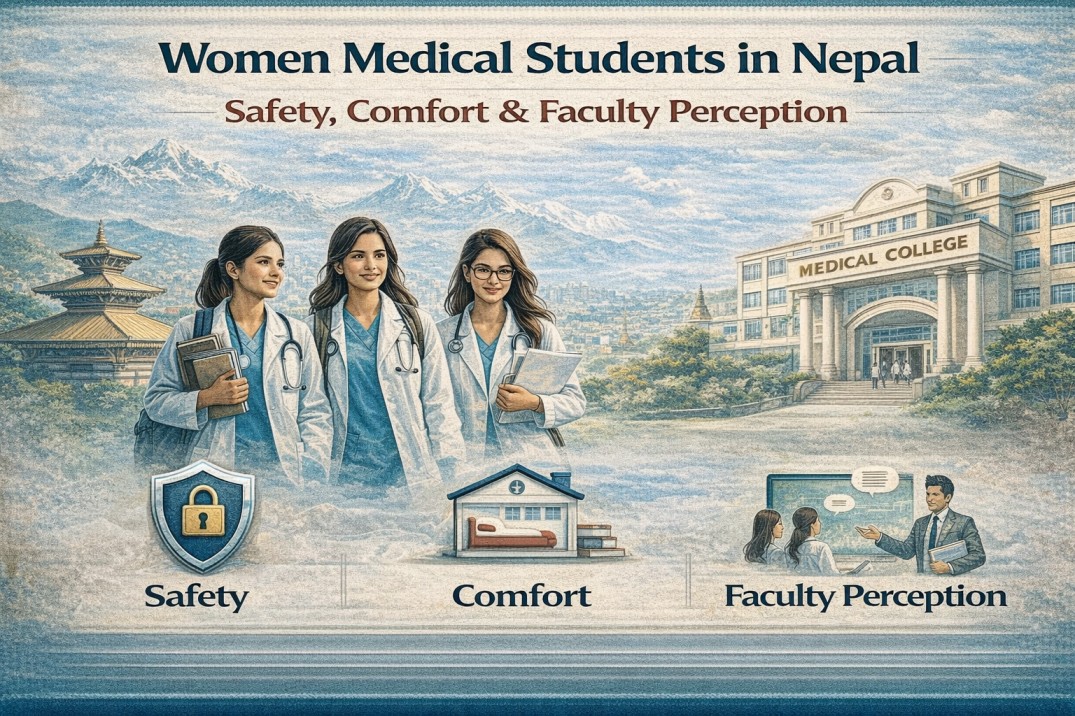
Nepal is fast emerging as an attractive destination for Indian students and also has opened its doors to the world; specifically female candidates who wish to study MBBS. Cheap tuition, international standard of education and proximity with India are some of the reasons students would love to study in Nepal.” But for women, other factors such as safety and comfort and a supportive learning environment trump these. A glimpse into the life of female students living with academic study, hostel residence and clinical exposures during their medical course in Nepal would be beneficial for perspective doctors.
For detailed information on MBBS courses and colleges in Nepal, click at MBBS in Nepal.
1 Safety First: Secured Campuses & Securities Hostels
Personal safetyPersonal safety is one of the biggest issues for women studying abroad. Security is Topped by Nepalese Medical Colleges-through many ways!
- Girls hostels: Many colleges have separate girls’ hostels with round the clock security and CCTV.
- Access control: With strict visitor policies, unwanted people won’t gain access to your hostel premises.
- Safe transportation: Most colleges have an arrangement of buses or transportation to commute safely within hostels, lecture halls and hospitals.
- Campus surveillance: Reduce risks and secure all facilities with laboratory and library monitoring, as well as in hospital wards.
Ananya, a 3rd year student from India says:
“Being in a safe hostel provided wings to my studies where I could concentrate fully without any concerns over safety.
Comfortable Living for Academic Success
Residential housing that is a student’s home away from home translates to increased academic and residential success.
- Hostel with all facilities: Female hostels have study tables, Wi-Fi and common areas of entertainment for studies and leisure.
- Healthy food choices: Messes provide a wide range of dietary requirements for students to maintain a balanced diet.
- Support peer:Residence sharing brings you friendships, group studies and mutual guidance in a favorable atmosphere.
A majority of the women students enumerated about hostel facilities and recreational spaces which cuts down stress level and develops a healthy academic routine.
Equal and Inclusive Learning: "A good learning environment"
Note: Nepalese medical colleges follow standard MBBS curriculum which is equivalent to WDOMS/ National Medical Commission (NMC) and approved, Beside that The MD degree awarded by the college is also valid in India (PG) and abroad.
- Lectures/ tutorials: Staff personally encourage active participation with female students finding a supportive environment to ask questions and remove doubts.
- Practical’s-Lab of Anatomy, Biochemistry and Pathology are filled-in in a professional environment with Observer ship for gender sensitivity.
- Clinical rotations: In each rotation (medicine, surgery, specialty etc) you undertake bedside teaching covering ward rounds and patient-interactions supervised by trained faculty to maintain safety and dignity.
Ritu, a 4th-year student, notes:
“Professors are fair to all students; clinical responsibilities are handled in a respectful, nurturing way that makes me feel more and more confident about what I am doing.”
Cultural Adaptation and Social Life
Cultural Nepal is the backdrop that makes female students feel they “fit in”:
- Multinational Society: Interaction with Indian and other nationals improves cultural sensitivity and social confidence.
- Gender friendly staff: There is a focus on respecting and supporting female students and they don’t hesitate to come forward if he or she have any problem.
- Extra-Curricular: Sports, cultural activities and student clubs make up of a well-rounded schools life to keep the minds healthy as well help with personal development.
This is conducive to the integration and performance of female students.
Challenges and Coping Strategies
But even in this supportive setting for women, there are some potential challenges female students may experience:
- First adjustment: It can be tough to transition into new climates, food and language.
- Ward rounds: Talking to patients in country hospitals can be delicate and supportive.
- Homesickness: It can be emotionally difficult to stay away from family for long periods.
Coping strategies:
- Lean on peers and senior students for help.
- Engage in substantive and cultural events for the support.
- Prompt faculty mentoring is required to negotiate clinical duties safely.
Testimonials from Female Students
- Ananya, Delhi:
“Hostel safety and a supportive faculty made me concentrate only on studies without thinking of personal security.”
- Priya, Maharashtra:
"The rotation programs are run professionally and everywhere the students are dealt with just as good as the boys.
- Shreya, Uttar Pradesh:
“Living with my intercultural flatmates enabled easier adjustment and party study time made learning fun.
Conclusion
It is safe, comfortable and the quality of medical education for female students in Nepal is extraordinary. Safe hostels, friendly teachers, mixed learning environment and culturally hospitable are the best features for women’s candidates to pursue MBBS. Selecting NMC Approved Colleges ((NMC, WDOMS) and adhering to global standards ((WHO) have us “Girls” well poised at Medical school gates as the gatekeepers with practising in India or overseas.
For details about the colleges and admissions procedure in many MBBS universities of Nepal visit my page – MBBS in Nepal.